
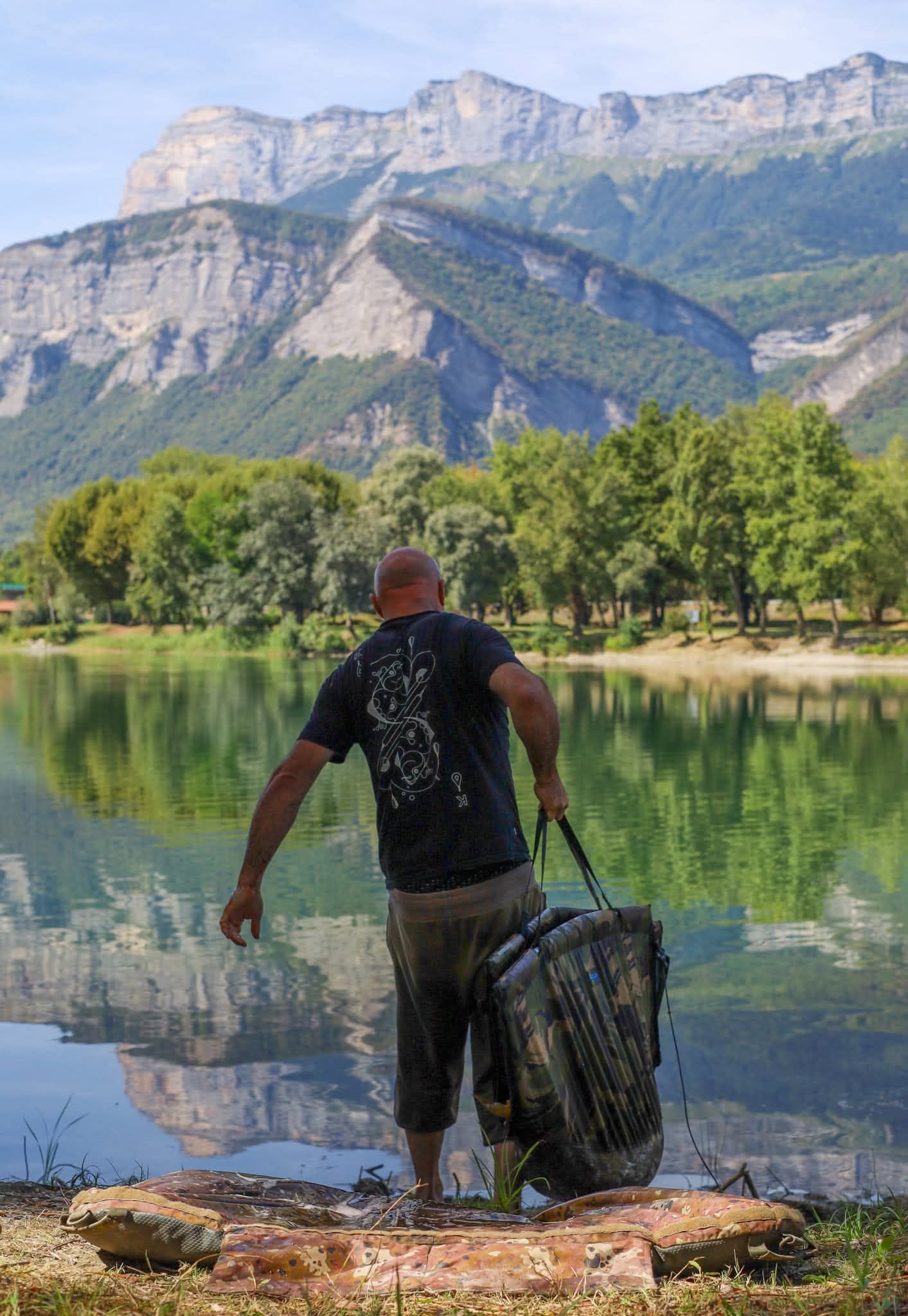
Why the Alps are different
Many picture French carp fishing as flat, sun-baked commercial lakes or vast lowland reservoirs under a big open sky. Head into the Alps and the picture changes completely. Public lakes here sit in glacial basins and old quarry workings fed by snowmelt and mountain streams, and the water runs noticeably colder and clearer than almost anywhere else in the country.
That clarity is the whole point. In a lot of Alpine pits you can stand on the bank and watch fish move over gravel bars ten or fifteen feet down, long before you’d ever see a fin in a typical lowland pit. It changes how you fish — long-range visual spotting, stalking single fish, reading their reaction to bait in real time — and it changes what you come home with. A mountain backdrop behind a big old carp, water so clear the fish looks like it’s suspended in glass, is a shot that just doesn’t happen anywhere else in the country.
Why the fish look the way they do: Many of these waters are old and rarely stocked. The carp that have grown up in them tend to be deeply coloured — dark bronzes, near-blacks, heavily scaled old-strain fish — a look strongly associated with genuinely wild, long-established populations rather than recently introduced commercial stock.
What to expect on the bank
Water and access
Depth and clarity vary a lot between old quarry pits (often steep-sided, deep, and rocky) and natural or glacially-fed lakes (colder, sometimes weedier, occasionally with a stronger current influence near inflows). Altitude matters more than people expect — a lake at 1,000m behaves very differently through the season than one at 300m, with a shorter warm-water window and fish that can feed hard once temperatures lift.
Rules and licensing
As with the rest of French public water, these lakes fall under the standard carte de pêche system, and night fishing, boat use, and bivouac rules vary lake by lake. This is exactly the kind of detail worth checking before you commit to a long drive into the mountains — a rule that applies on a lowland lake an hour away may not apply here.
Best time to go
Late spring through early autumn gives the most reliable window, once meltwater has settled and surface temperatures have climbed enough to get fish actively feeding. Many Alpine venues fish noticeably later into the year than their lowland equivalents, simply because the water takes longer to warm.
How to actually find these lakes
This is the part that trips most visiting anglers up. Alpine gravel pits and mountain lakes are rarely mentioned in general France fishing guides, they don’t always have an obvious name on a road map, and access roads can be unmarked forestry tracks that don’t appear on a standard sat nav search. Knowing they exist is one thing — finding the exact pin, working out if it’s public, and checking the rules before you drive hours into the mountains is another.
That’s the exact gap PiscaMaps was built to close. Instead of guessing from forum posts or old blog mentions, you get:
- A searchable map covering thousands of French lakes, rivers, and canals — including the smaller, lesser-known Alpine waters that don’t appear in typical guides.
- Filters for the details that matter — water size, night fishing allowed, boat rules, bivouac legality — so you can rule venues in or out before you’ve even left home.
- Direct links to maps and licensing bodies for each venue, so you’re not stitching together information from five different websites.
- Real angler reviews and shortlisting so you can save promising lakes and compare notes as you plan a trip.
Plan your Alpine carp trip
Search the full PiscaMaps directory for public lakes across the French Alps and beyond — filtered by size, rules, and access.
Explore the map →Tips for fishing clear Alpine water
- Go stealthy. Clear water means visible lines, shadows, and movement spook fish far more easily than in coloured lowland pits. Longer fluro leaders and low-vis line make a real difference.
- Use the visibility to your advantage. Where the water allows it, spend time watching before casting. Spotting an individual fish and presenting to it directly often beats blind-fishing a swim.
- Adjust for the temperature. Alpine water runs cold. Fish metabolism is slower in cold water — scale bait quantities down and be patient with feeding spells that may come in narrower windows than you’re used to.
- Plan for altitude. Weather can change fast in the mountains. Whatever kit you bring for a French lake trip, add a layer and plan for afternoon storms that wouldn’t feature in the lowlands.
Getting the shot: If the mountain-backdrop catch shot is the goal, think about timing as much as the fish. Early morning or golden-hour light against the peaks makes a far stronger photo — but shadows can be an issue as the sun takes longer to clear the mountains. Pick your shot positions in advance if possible.
Final word
The French Alps hold some of the most visually striking public carp fishing in the country. Cold, clear water and old, richly coloured fish make for a completely different experience to the lowland pits most UK anglers are used to, and a mountain-backdrop catch shot that’s hard to match anywhere else. The only real barrier is finding the lakes in the first place — which is exactly where PiscaMaps comes in.