Lough Reagh is a scenic Kerry lake offering free coarse fishing for pike, perch, bream, roach, rudd, tench and eel. Game fishing (trout, salmon) requires IFI licence. Local permit may be needed.
The fishery supports both game and coarse species, giving anglers a wide range of options throughout the year. brown trout respond well to fly fishing during hatches. Coarse stocks including Perch, Bream, Roach, Rudd, Tench, Eel are a consistent draw for visiting anglers.
One of the appeals of Lough Reagh is that coarse fishing is free and accessible to all. The only licence requirement is for those targeting salmon or sea trout, for which an IFI state licence is mandatory. Confirm access where the bank crosses private land.
Lough Reagh holds pike, perch, bream, roach, rudd, tench, eel, brown trout. Pike are a premier Irish sport fish — lure and deadbait fishing both produce well.
Coarse fishing is free in Ireland; a state licence is required for salmon and sea trout. Always check local rules before your visit.
The following methods are recommended for the species found in Lough Reagh:
Pike are the apex predator of Irish loughs and grow to impressive sizes. Lure fishing with large plugs (12–20cm), rubber jerk baits and spinnerbaits accounts for a great many fish. Static and sink-and-draw deadbaiting with roach, mackerel or smelt is highly effective from autumn through winter. Always use a wire trace of at least 15kg breaking strain and handle pike with wet hands — Irish pike stocks are a treasured national resource worth protecting.
Traditional wet fly fishing accounts for most trout on Irish loughs. Classic patterns include the Claret Bumble, Green Peter, Daddy Long Legs and Invicta. Fish a team of three flies from the front of a drifting boat for best results. On calmer evenings, dry fly and emerger patterns fished near the surface can be deadly during a hatch. A 9–10ft rod rated for a #6–7 line is ideal.
Irish lough coarse fishing is often at its best with simple float tackle — a waggler or stick float with maggot, worm or caster over a bed of groundbait will consistently account for bream, roach and rudd. Swimfeeder tactics work well for bream in deeper water. Tench prefer weedy margins and respond to a cocktail of maggot and sweetcorn on a size 10–12 hook. Early morning and evening sessions are most productive in summer.
Eels are common in Irish loughs and can be caught on worm or small deadbait fished hard on the bottom after dark. While not a primary target, larger eels make for an interesting session and require careful handling — grip just behind the head and use a cloth to control the body.
Irish loughs fish year-round, but each season brings different opportunities and target species:
Trout season opens and fish are active near the surface on hatching flies. Pike fishing remains strong in cool water. Look for coarse species moving into warmer, shallower bays.
Evening sessions are most productive as daytime temperatures push fish deeper. Rudd and roach are catchable near reed beds on float tackle. Tench feed actively at dawn. Pike can be sluggish in warm water — fish deeper or wait for cooler evenings.
The prime season for specimen pike as they feed hard before winter. Deadbaiting comes into its own. Bream shoals are active throughout the water column — a great time for big nets of fish.
Fishing slows but pike remain catchable on static deadbaits in deep water. Perch shoal up and respond well to small lures and jig heads. Dress warmly, exercise caution around icy banks, and always let someone know where you are fishing.
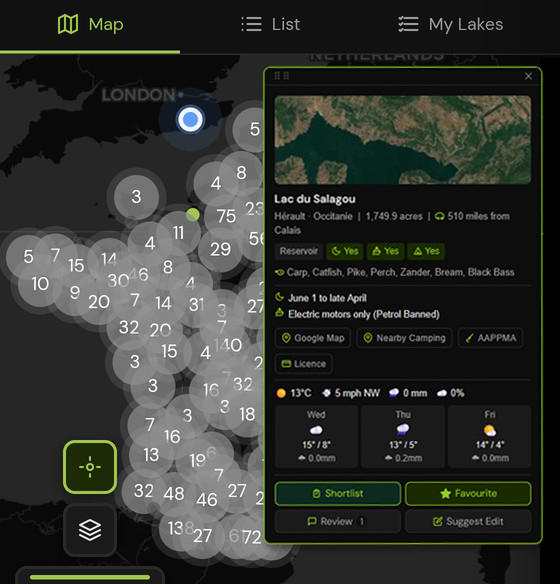
Browse 6,000+ Irish fishing waters — filter by species, water type and access. View Lough Reagh and thousands of Irish loughs on the map.
Coarse fishing at Lough Reagh is free in the Republic of Ireland — no licence is required for non-game species. A state rod licence from Inland Fisheries Ireland is required for salmon and sea trout. Licences can be purchased online or from local tackle shops.
Located in Kerry, Munster, Lough Reagh is best approached with a good local map and, where possible, local knowledge from the nearest tackle shop or angling club. Many Irish loughs have limited bank access and a boat significantly increases the fishable area — boat hire is available on some larger waters.