
Marl Brook is a small, intimate watercourse typical of Midlands lowland streams, characterized by gentle flows and clay-rich substrate. The modest 5.4km length makes it ideal for short, focused fishing sessions with good accessibility. Expect classic coarse fishing in a quiet rural setting with reasonable populations of smaller species.
The statutory close season on Marl Brook runs 15 March – 15 June (rivers, England & Wales). No coarse fishing is permitted during this period. Beyond the rod licence, fishing rights on Marl Brook are typically held by local angling clubs — check with the relevant club or day ticket provider before visiting.
Water level data from the Environment Agency Real Time Flood Monitoring API. Nearest gauging station. Always verify conditions on arrival.
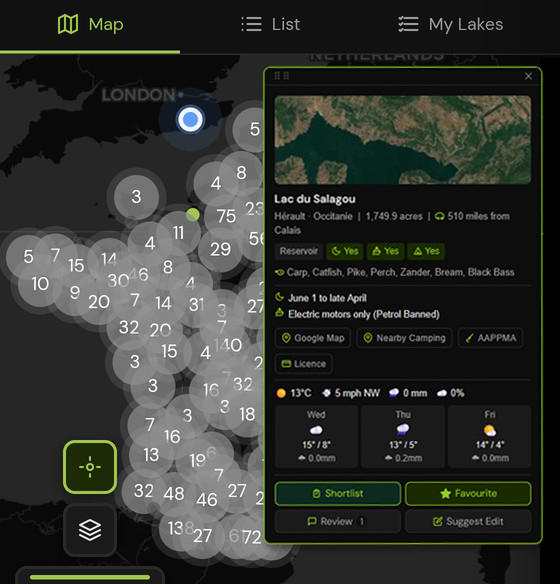
Filter by water type, species and access. View Marl Brook and thousands of other UK fishing venues on the interactive map.
Marl Brook holds roach, dace, chub, perch, pike, gudgeon.
Pike fishing is a highlight on Marl Brook — both lure and deadbait tactics are effective, particularly through autumn and winter.
An EA rod licence is required by law to fish Marl Brook. Club membership or a day ticket is also required on most stretches.
To fish Marl Brook, you need a valid EA rod licence, available online from gov.uk. Annual, day and 8-day licences are available. In addition to the rod licence, you will need club membership or a day ticket from the controlling angling club or riparian owner for most stretches of Marl Brook.
Always check conditions before you visit. Water quality, access and rules can change seasonally. The EA's Catchment Data Explorer provides up-to-date water quality information for Marl Brook.
Other UK fishing waters near Marl Brook on PiscaMaps: